
Best Time to Travel — Discover the Perfect Season for Your Dream Destination 2026

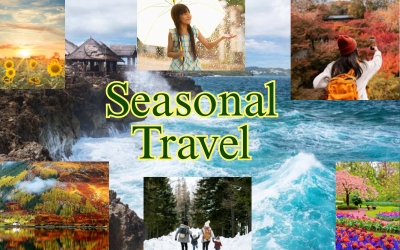
Best Time to Travel
Discover the Perfect Season for Your Dream Destination
with Holiday Haven Ventures
Picking the right time to travel can transform a good trip into an unforgettable one. Weather, crowds, cost, local festivals, wildlife activity, and even sea conditions all change across the year — and each factor matters differently depending on the destination and what kind of holiday you want. Below is a practical, friendly, and in-depth guide to help you choose the perfect season for your dream trip, plus smart tips on booking, budgeting, and packing. Whether you’re chasing sunshine, snow, cherry blossoms, or quiet streets, Holiday Haven Ventures has you covered.
- Understand the travel “seasons” (high / shoulder / low)
Travel professionals usually split the year into three broad seasons: peak (high) season, shoulder season, and low (off) season. Each has pros and cons:
- Peak season — best weather and most activities, but higher prices and larger crowds.
- Shoulder season — the sweet spot for many travellers: good weather, fewer crowds, and better prices.
- Low season — cheapest and least crowded, but weather or services may be limited.
Knowing how these apply to your destination helps you match the trip to your priorities.
- Choose by activity — match season to what you want to do
Different activities shine in different months. Ask yourself: what’s the main purpose of this trip?
- Beach & snorkeling — pick the local dry season when seas are calm and visibility is best. (e.g., many tropical islands are ideal in their November–April window).
- City sightseeing & cultural festivals — shoulder seasons are often best: mild weather and manageable crowds (spring and autumn in many European cities).
- Hiking & national parks — avoid monsoon or melting snow; aim for dry, stable months specific to the region.
- Wildlife watching — timed to migrations, birthing seasons, or breeding displays (these vary wildly — plan with a specialist).
- Winter sports — travel in local winter months for reliable snow and resort operations.
- Region cheat-sheet (broad, practical windows)
Here are simple, easy-to-remember windows for commonly visited regions — remember local microclimates can vary, so check specifics for your chosen island, mountain or city.
- Europe — shoulder seasons (April–May and September–October) give mild weather, fewer crowds and better prices; summer (June–August) is peak season.
- Southeast Asia — many mainland destinations see their cool/dry season roughly November–April (great for sightseeing); island rain patterns differ by coast.
- Maldives & many tropical Indian Ocean islands — best November–April for dry, calm seas and excellent diving/snorkeling conditions.
- South Asia (e.g., Bhutan, Nepal, northern India) — spring (March–May) and autumn (September–November) are usually best for trekking and mountain views.
- Japan — iconic spring cherry blossom window (typically March–April) and autumn foliage (October–November) are peak visual seasons — but both draw crowds.
- North America & Canada — summer for urban and coastal travel; autumn for foliage road trips; winter for skiing.
- The shoulder-season advantage — when to consider it
If you care about comfort + value + authenticity, shoulder season often wins. You’ll usually get:
- Pleasant weather with fewer tourists.
- Lower accommodation and flight costs than peak months.
- Easier reservations for popular restaurants and tours.
Because of climate unpredictability and rising heat extremes in some destinations, many travelers are shifting away from the traditional summer peak toward shoulder months — a trend that also reduces crowds and sometimes cost.
- Budget & booking timeline (practical steps)
- 6–12 months ahead: Book high-demand periods (Christmas, school holidays, major local festivals).
- 3–6 months ahead: Great for shoulder-season fares and many international routes.
- Last-minute: Can work for off-season escapes but expect limited availability.
- Price tip: Traveling just outside school holiday windows saves a lot — mid-week departures are often cheaper.
Also consider refundable or flexible tickets if your destination’s climate or local restrictions are uncertain — it buys peace of mind.
- Packing & preparation by season
- Hot/dry: breathable clothes, strong sun protection, a refillable water bottle.
- Monsoon/rainy: quick-dry layers, waterproof shoes, a lightweight rain jacket, and zip-locks for electronics.
- Cold/winter: insulated layers, waterproof outerwear, warm boots and thermal underlayers.
- Shoulder season: pack for both warm and cooler days — think layers + a compact rain layer.
Always research daylight hours for your travel dates — shorter days can affect how much you can do in a day.
- Special considerations: festivals, wildlife, and ethics
- Festivals: If your dream includes a photo-perfect festival experience, check the exact dates years in advance and the associated costs.
- Wildlife: Book reputable, responsible guides and tours timed to natural cycles (breeding, migration).
- Responsible travel: Traveling in sensitive seasons (breeding or harvest times) requires respect and caution — follow local rules, give space to animals, and choose operators who prioritize sustainability.
- What if your dates are fixed?
If you can’t change dates, adapt your destination. For example, if you must travel in July, choose destinations that are in their best season then (northern Europe or high-altitude mountain areas), rather than forcing a tropical beach holiday in monsoon season.
Planning season-sensitive trips is our specialty. We craft packages that match your preferences — whether that’s a sun-soaked beach escape during dry months, a quiet shoulder-season European city break, or an adventure tailored to wildlife seasons and local festivals. Check our latest seasonal packages and personalized itineraries directly with Holiday Haven Ventures — we’ll recommend the best months, local tips, and booking windows so you get the most from every day of your trip.
- Quick decision checklist (use before you book)
- What’s my main activity? (beach, city, hiking, festival)
- How important is weather vs. budget?
- Am I flexible on dates? If yes — prioritize shoulder seasons.
- Will crowds ruin the experience for me? If so — avoid peak months.
- Have I checked local events or closures (public holidays, monsoon schedules, Ramadan dates)?
Final tips & call to action
- Always cross-check local weather patterns and festival calendars for the exact region you plan to visit — microclimates and local events can change the ideal month.
- Think beyond weather: flight cost, accommodation rates, and how crowded attractions are will all shape your experience.
- If you want a personalized recommendation — tell us where you dream of going, what you want to do there, and roughly when you can travel. Holiday Haven Ventures will map the best months, create a custom itinerary, and handle flights, visas, and local guides so you can relax and enjoy the trip.
Ready to find the perfect month for your dream destination? Message Holiday Haven Ventures today — let’s design a season-perfect escape just for you. ✈️🌍
#TravelSmart #BestTimeToTravel #ShoulderSeason #HolidayHavenVentures
Selected sources used for planning tips and seasonal recommendations: Expat Explore (season definitions and travel-season guidance), Rick Steves/Europe season guide (shoulder-season advice), Audley/Kuoni/TUI guides for Maldives and Southeast Asia season windows, and a recent FT piece on shifts in traveler timing due to climate and heat.
List of Countries and Their Best Travel Months
Asia
Best months: March–May (Spring), October–November (Autumn)
Why: Cherry blossom, pleasant weather, autumn colors.
Best months: April–May, September–October
Why: Comfortable temperatures, perfect for sightseeing.
Best months: November–February
Why: Dry season, cooler weather, ideal beaches.
Malaysia:
Best months: December–February (Langkawi/West Coast), June–August (East Coast)
Why: Different coasts have different monsoon seasons.
Singapore:
Best months: February–April
Why: Less rainfall, perfect for city tours.
Dubai (UAE):
Best months: November–March
Why: Pleasant winter weather, outdoor activities.
India:
Best months: October–March
Why: Cooler, great for Rajasthan, Goa, Kashmir.
Nepal:
Best months: March–May, September–November
Why: Best trekking weather.
Bhutan:
Best months: March–May, September–November
Why: Clear skies, festivals.
Indonesia (Bali):
Best months: April–October
Why: Dry season, ideal for beaches.
Indian Ocean Islands
Maldives:
Best months: November–April
Why: Calm seas, crystal-clear snorkeling.
Mauritius:
Best months: May–December
Why: Dry and cool season.
Seychelles:
Best months: April–May, October–November
Why: Ideal diving and beach weather.
Middle East
Turkey:
Best months: April–June, September–October
Why: Comfortable weather for Istanbul, Cappadocia.
Qatar:
Best months: November–March
Why: Best for outdoor activities.
Europe
France:
Best months: April–June, September–October
Why: Pleasant weather, fewer crowds.
Italy:
Best months: April–June, September–October
Why: Spring blossoms & early autumn charm.
Greece:
Best months: May–October
Why: Warm beaches; July–August is more crowded.
Switzerland:
Best months: June–September (summer), December–March (ski season)
Why: Perfect for hiking or snow sports.
United Kingdom:
Best months: May–September
Why: Best sunshine & mild weather.
Netherlands:
Best months: April (Tulip season), May–September
Why: Flower blooms & outdoor events.
North America
USA:
- New York & East Coast: April–June, September–November
- California: March–May, September–October
- Florida: November–April
- Hawaii: April–June, September–November
Canada:
Best months: June–September
Why: Warm weather and national parks.
Australia & Oceania
Australia:
Best months
- Sydney & Melbourne → September–November, March–May
- Queensland (Great Barrier Reef) → June–October
New Zealand:
Best months: November–March
Why: Summer season, perfect outdoor travel.
Africa
South Africa:
Best months: May–September (safari), November–March (city + beaches)
Morocco:
Best months: March–May, September–November
Egypt:
Best months: October–April
Why: Cooler desert temperature.
South America
Brazil:
Best months: May–September
Why: Dry season.
Peru (Machu Picchu):
Best months: May–September
Why: Clear skies for trekking.