
Jerusalem’s Islamic History: A complete guide with Holiday Haven Ventures 2026

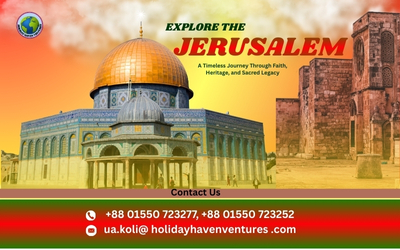
Jerusalem’s Islamic History with Holiday Haven Ventures
A Timeless Journey Through Faith, Heritage, and Sacred Legacy
Jerusalem is not merely a destination on a map—it is a city of the soul, layered with centuries of faith, devotion, and history. For Muslims around the world, Jerusalem (Al-Quds) holds a unique and deeply spiritual place. It is the land of prophets, the site of the miraculous Isra and Mi‘raj, and home to Al-Masjid Al-Aqsa, Islam’s third holiest mosque. Exploring Jerusalem’s Islamic history is not just an educational journey; it is a spiritual experience that connects travelers with the very roots of Islamic civilization. With Holiday Haven Ventures, this journey becomes meaningful, respectful, and unforgettable.
Jerusalem in the Light of Islam
In Islamic tradition, Jarusalem is known as Bayt al-Maqdis or Al-Quds al-Sharif. Its significance dates back to the earliest days of Islam and even earlier, as many prophets mentioned in the Qur’an lived, preached, or passed through this sacred land.
One of the most profound events in Islamic belief is Isra and Mi‘raj—the Night Journey and Ascension of Prophet Muhammad (peace be upon him). According to Islamic tradition, the Prophet was taken from Masjid al-Haram in Makkah to Masjid al-Aqsa in Jerusalem, and from there ascended to the heavens. This event firmly established Jerusalem as a central spiritual axis in Islam and elevated Al-Aqsa Mosque to immense religious importance.
Al-Masjid Al-Aqsa: The Heart of Islamic Jerusalem
Al-Masjid Al-Aqsa is not a single building but a vast sacred compound known to Muslims as Al-Haram al-Sharif (The Noble Sanctuary). Covering approximately 144,000 square meters, the compound includes prayer halls, courtyards, minarets, and historic structures.
Key Islamic Landmarks within the Compound:
- Al-Aqsa Mosque (Qibli Mosque):
The main congregational mosque, identifiable by its silver-gray dome, where Muslims gather for prayer.
- The Dome of the Rock:
One of the oldest surviving Islamic monuments, built during the Umayyad Caliphate. It enshrines the sacred rock associated with the Prophet’s ascension during Mi‘raj.
- Al-Marwani Mosque (Solomon’s Stables):
An underground prayer space reflecting the architectural depth and continuity of Islamic Jarusalem.
For centuries, Muslims have believed that praying at Al-Aqsa carries immense reward, making it a cherished destination for pilgrims and spiritual travelers.
The Islamic Conquest and Umar ibn al-Khattab (RA)
Jerusalem entered Islamic rule peacefully in 637 CE during the caliphate of Umar ibn al-Khattab (RA). The city’s Christian patriarch, Sophronius, personally handed over the keys to Caliph Umar, impressed by Islamic principles of justice and tolerance.
One of the most remarkable moments in Jerusalem’s history occurred when Umar (RA) refused to pray inside the Church of the Holy Sepulchre, fearing that future generations might convert it into a mosque. This act symbolized Islam’s respect for other faiths and established a tradition of coexistence that defined Jarusalem for centuries.
Under Islamic governance, Jerusalem became a city of religious harmony, where Muslims, Christians, and Jews practiced their faiths freely.
The Umayyad Era: Architectural and Spiritual Flourishing
The Umayyad period marked a golden chapter in Jarusalem’s Islamic history. During this time:
- The Dome of the Rock was constructed (late 7th century).
- Al-Aqsa Mosque was expanded and beautified.
- Islamic art, calligraphy, and architecture flourished.
The stunning mosaics, Quranic inscriptions, and geometric designs found in these structures reflect early Islamic artistic excellence and spiritual symbolism. Travelers visiting today can still witness the brilliance of Umayyad craftsmanship.
Jerusalem Through the Crusades and Salahuddin Ayyubi
In 1099, Jarusalem fell to the Crusaders, and many Islamic sites were damaged or repurposed. Al-Aqsa Mosque was used for non-religious purposes, and Muslim worship was halted for nearly 90 years.
This period ended with the historic victory of Salahuddin Ayyubi (Saladin) in 1187. His reconquest of Jerusalem is remembered not only for military success but for mercy and justice. Salahuddin restored Islamic sanctuaries, reopened Al-Aqsa for prayer, and allowed followers of other religions to remain in the city peacefully.
His legacy remains a symbol of Islamic leadership, ethics, and compassion—values that continue to inspire Muslims worldwide.
Ottoman Stewardship and Preservation
From the 16th century onward, Jerusalem came under Ottoman rule, lasting nearly 400 years. The Ottomans invested heavily in preserving Islamic heritage:
- Restoration of Al-Aqsa and the Dome of the Rock
- Construction of city walls (still standing today)
- Maintenance of waqf (Islamic endowment) properties
The Ottomans ensured that Jerusalem remained a functioning Islamic city, preserving its spiritual and architectural legacy for future generations.
Jerusalem Today: A Living Islamic Heritage
Despite modern challenges, Jerusalem remains alive with Islamic culture, faith, and resilience. The call to prayer echoes from minarets, Quran recitations fill the courtyards, and worshippers from around the world gather at Al-Aqsa.
Visiting Jerusalem today requires sensitivity, awareness, and respectful guidance—something Holiday Haven Ventures prioritizes deeply. A journey here is not ordinary tourism; it is a sacred encounter with living history.
Traveling to Jerusalem with Holiday Haven Ventures
Holiday Haven Ventures understands that visiting Jerusalem is both a spiritual and historical journey. Our carefully designed travel experiences focus on:
- Islamic historical education with knowledgeable guides
- Respectful access to sacred sites
- Comfortable and ethical travel arrangements
- Cultural sensitivity and safety awareness
Whether you are a history enthusiast, a spiritual seeker, or a traveler wishing to understand Islam’s rich heritage, Holiday Haven Ventures ensures your journey to Jerusalem is meaningful and well-guided.
Why This Journey Matters
To walk through Jerusalem is to walk through centuries of Islamic civilization. Every stone tells a story—of prophets, caliphs, scholars, and ordinary believers who prayed, lived, and dreamed in this sacred city.
Understanding Jerusalem’s Islamic history strengthens our connection to faith, deepens our appreciation of Islamic values, and reminds us of the importance of justice, patience, and unity.
Final Thoughts
Jerusalem is not just a destination—it is a trust, a memory, and a prayer carried in the hearts of Muslims worldwide. Exploring its Islamic history is an act of remembrance and respect.
With Holiday Haven Ventures, you don’t just visit Jerusalem—you experience it with understanding, dignity, and spiritual depth. Let us help you embark on a journey that will stay with you long after you return home.